
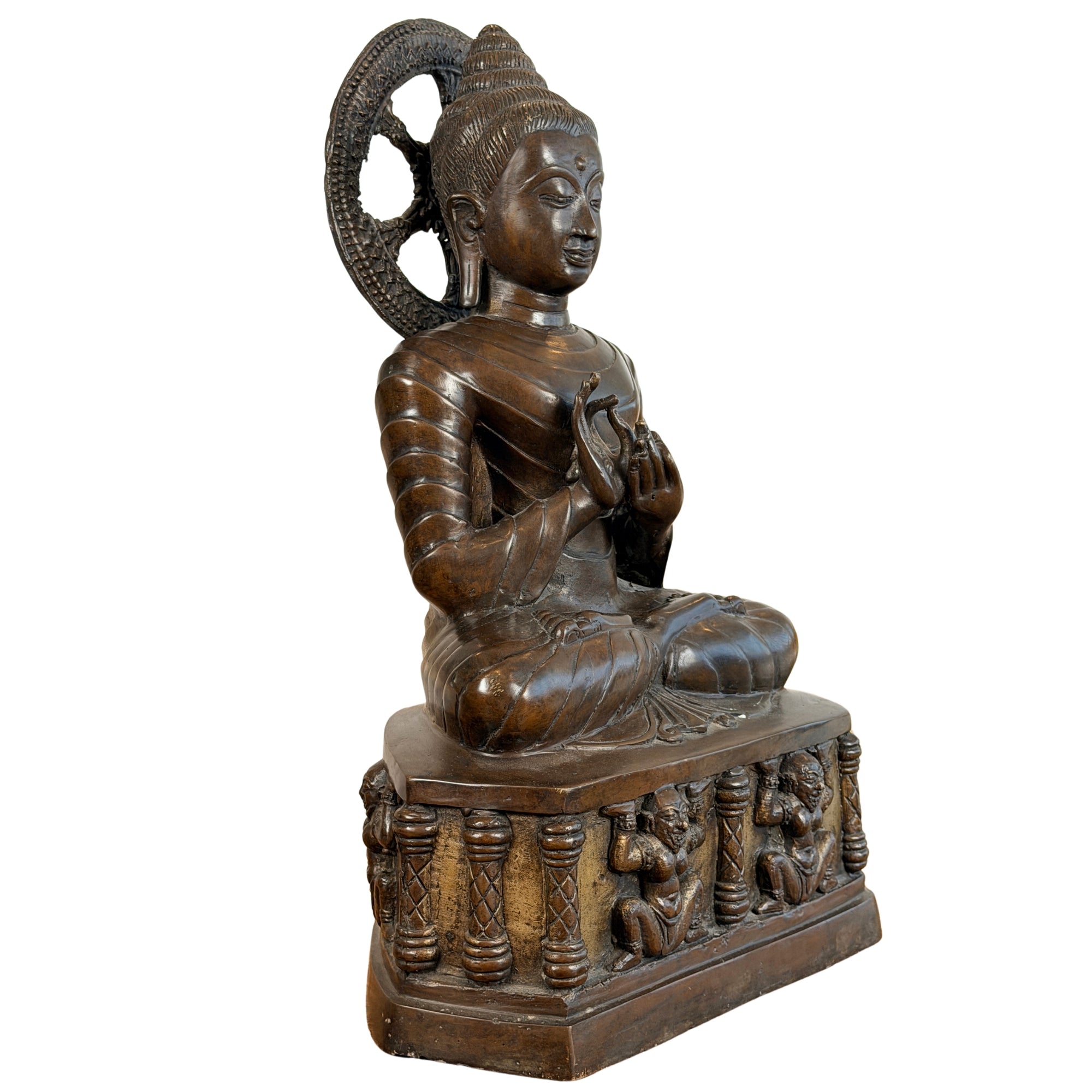
A centuries-old Buddha image is more than a work of stone or bronze. Antique buddhist arts and Buddha statues show how Buddhism spread across Asia and took on its own character in each country. Behind every Buddha Statue lies a story of trade, faith and cultural exchange.
In this article, you’ll learn how Buddhist art travelled from India to Southeast Asia and Sri Lanka, and which periods, empires and monasteries shaped it. At 1stBuddha, we believe this background matters, because it changes the way you look at every statue.
How Buddhism Spread from India
Trade Routes as a Bridge Between Cultures
When sea connections were established between the countries around the Mediterranean and China, India became the main intermediary. As a result, Indian influence grew in many areas, especially towards Southeast Asia.
Trade routes linked to India developed in places such as:
- Southern Burma
- Central and Southern Siam
- Lower Cambodia
- Southern Vietnam
Culture travelled along with trade. Sacred texts and Indian literature, such as the Ramayana and the Mahabharata, brought Buddhism, Brahmanism and Hinduism to the region.
Why Buddhism Took Root
Of all these religions, the people of the region embraced Buddhism above the others. They then developed their own Buddhist art, with features that suited their own country and culture.
The History of Antique Buddhist Arts in Southeast Asia
Buddhist art in the region developed in distinct phases. Each period left its own mark.
1st to 8th Century: Foundations in the Gupta Style
During this period, the countries of the region developed their own versions of Buddhist art. Its foundation lay in the Indian Gupta style. Works from this era can still be found throughout the area.
8th and 9th Century: The Sailendra Renaissance in Java
In the Medang Mataram Kingdom of Central Java, a distinctive style emerged: Sailendra art. So much was built during this time that it is regarded as a renaissance of Buddhist art in Java. Well-known examples include:
- Kalasan
- Manjusrigrha
- Mendut
- the Borobudur stone mandala
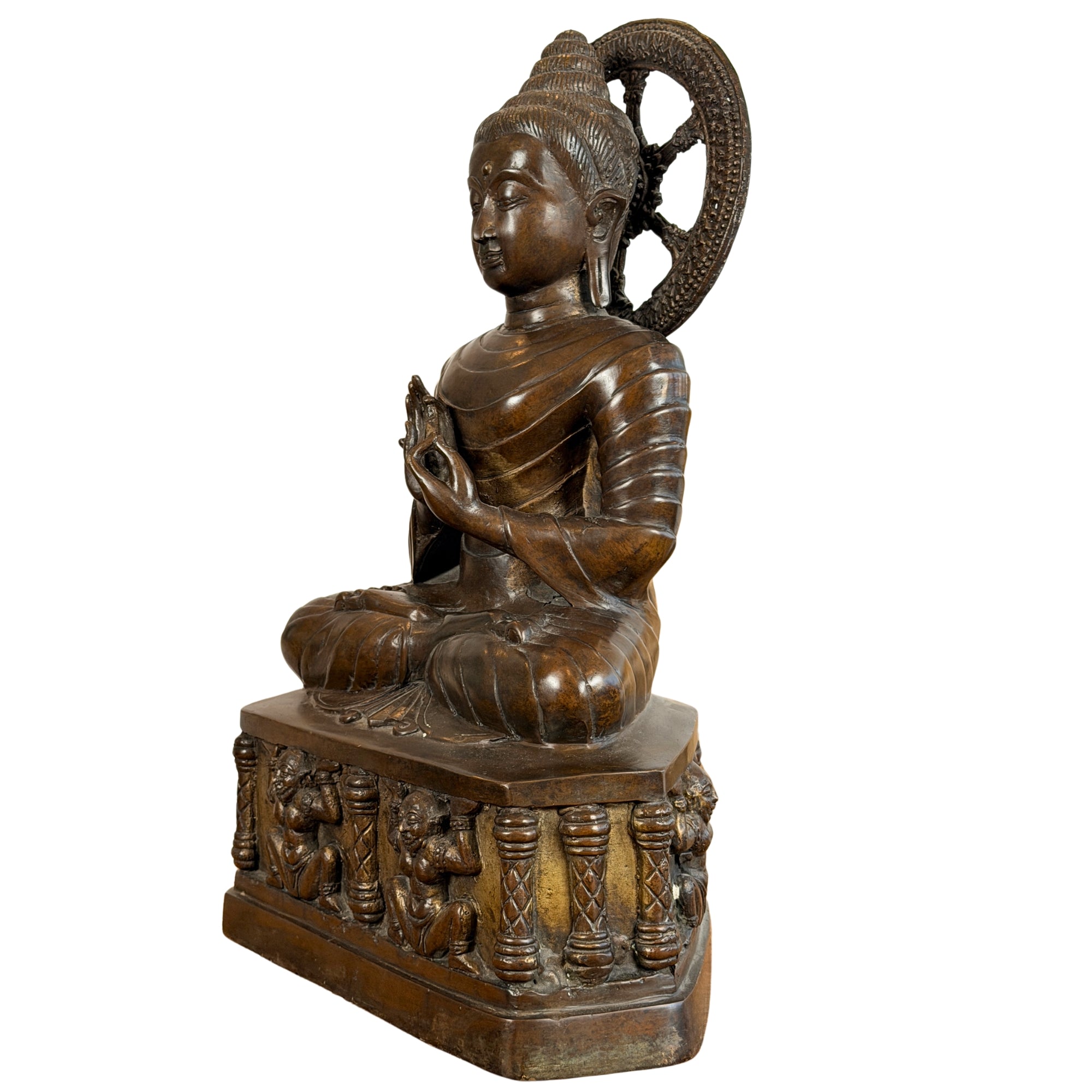
9th to 13th Century: The Great Empires of Srivijaya and Khmer
In these centuries, several Southeast Asian states grew into powerful empires. They actively built Buddhist structures and images of the Buddha and of figures associated with Buddhism.
The Srivijaya Empire in the south and the Khmer Empire in the north led the way. Both expressed the rich ideas of Mahayana Buddhism in their art.
13th Century Onwards: The Rise of Theravada
In the 13th century, Theravada Buddhism, based on the Pali canon, was introduced. The newly founded Thai kingdom of Sukhothai followed this school. Monasteries were typically built in central locations, where monks gathered to receive instruction and resolve disputes.
From the 14th century onwards, Theravada continued to spread to Burma, Laos and Cambodia. In the same 13th century, Singhasari art also developed in East Java.
Buddhism and Buddhist Art in Sri Lanka
The Arrival of Buddhism
Buddhism reached Sri Lanka in the 3rd century BCE through missionaries sent by the Mauryan Emperor Ashoka. The first monastery on the island was the Mahavihara in Anuradhapura, founded by King Devanampiyatissa. From here, Buddhism spread across the island, and the monastery became the centre of the Theravada doctrine.
Three Monasteries That Shaped the Course
In 89 BCE, King Vattagamani founded the Abhayagiri Vihara, which followed Mahayana. Many ideas of the two schools clashed, leading to rivalry between the monks of both monasteries. This conflict later gave rise to a third monastery: Jetavanarama.
Buddhism in Sri Lanka was therefore dominated by three major monasteries:
1. Mahavihara
2. Abhayagiri
3. Jetavanarama
All monasteries built afterwards were affiliated with one of these three.
The Buddha Statue as an Expression of Faith
As Buddhism spread, monks created numerous statues and images depicting the teachings and life of the Buddha. These were mainly rock-cut statues and bronze statues. Well-known examples of rock-cut statues include:
- the Aukana Buddha Statue
- the Maligawila Buddha Statue
- Buduruwagala Raja Maha Viharaya
- Rambadagalla Viharaya
- the Samadhi Buddha Statue
The famous Kelaniya Raja Maha Vihara is also worth mentioning. It houses an image of the reclining Gautama Buddha, painted by the artist Solias Mendis.
Conclusion
The history of Buddhist art shows how trade and faith went hand in hand. From India, Buddhism travelled to Southeast Asia and Sri Lanka, where it grew into a rich artistic tradition, from the Gupta style and the Sailendra renaissance to the rock-cut statues of Sri Lanka.
Once you know this background, you can see the traces of centuries of religious and cultural development in every statue. You can explore our collection of statues and artworks in the 1stBuddha gallery.
Contact Us
Do you have questions about our statues, or would you like to know more about a specific piece in our collection? Contact us anytime. The 1stBuddha team will gladly help you find a statue that suits you.


