
Buddhism and art have been closely connected for centuries. One of the most powerful symbols of this tradition is the mandala, a circular design that captures the entire universe in a single image. From the colorful sand mandalas of Tibetan Buddhism to the hanging scrolls of Japan, the mandala carries a deep spiritual message wherever it appears.
So how exactly are Buddha and mandala connected? And how does the mandala meaning in Buddhism differ from one school to another? In this article, you'll learn about the origins, symbolism, and use of the mandala in five major Buddhist traditions.
What Is a Mandala?
The word mandala comes from Sanskrit and literally means "circle." Today, it refers to any diagram that represents the cosmos in a symbolic or metaphysical way. A mandala is a universe in miniature: a microcosm.
The Mandala in Hinduism and Buddhism
The mandala in Hinduism has its own meaning, just as it does in Buddhism. In both traditions, the circle generally symbolizes the universe. The mandala is often regarded as distinctly Buddhist art, but it is equally important in other religions.
Where Can You Find a Buddhist Mandala?
A Buddhist mandala can be found in several places:
- in monasteries
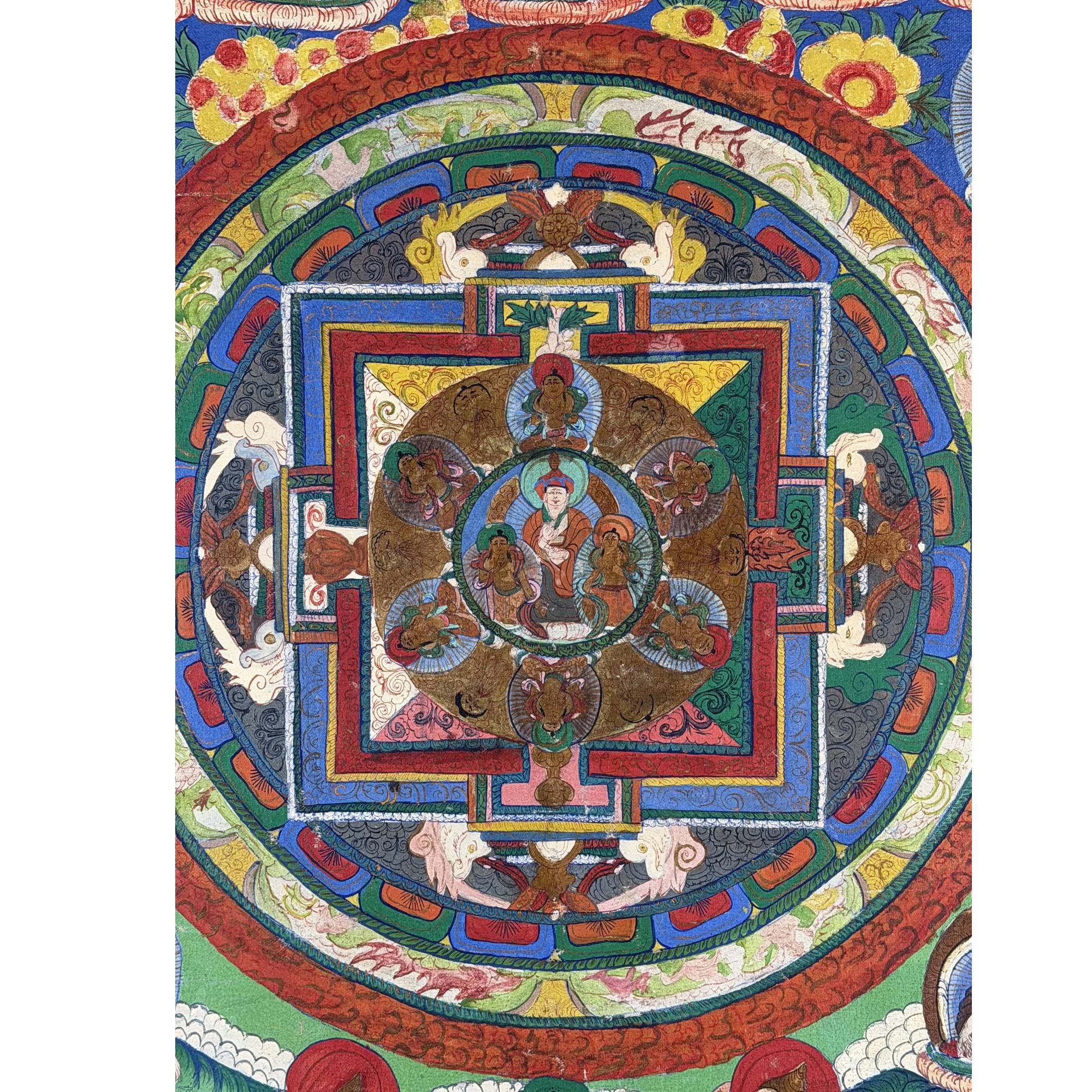
- in thangkas, traditional scroll paintings
- as symbolic representations of Buddhist sutras
This last point is a big part of the mandala's appeal, because it turns the teachings of the sutras into images.
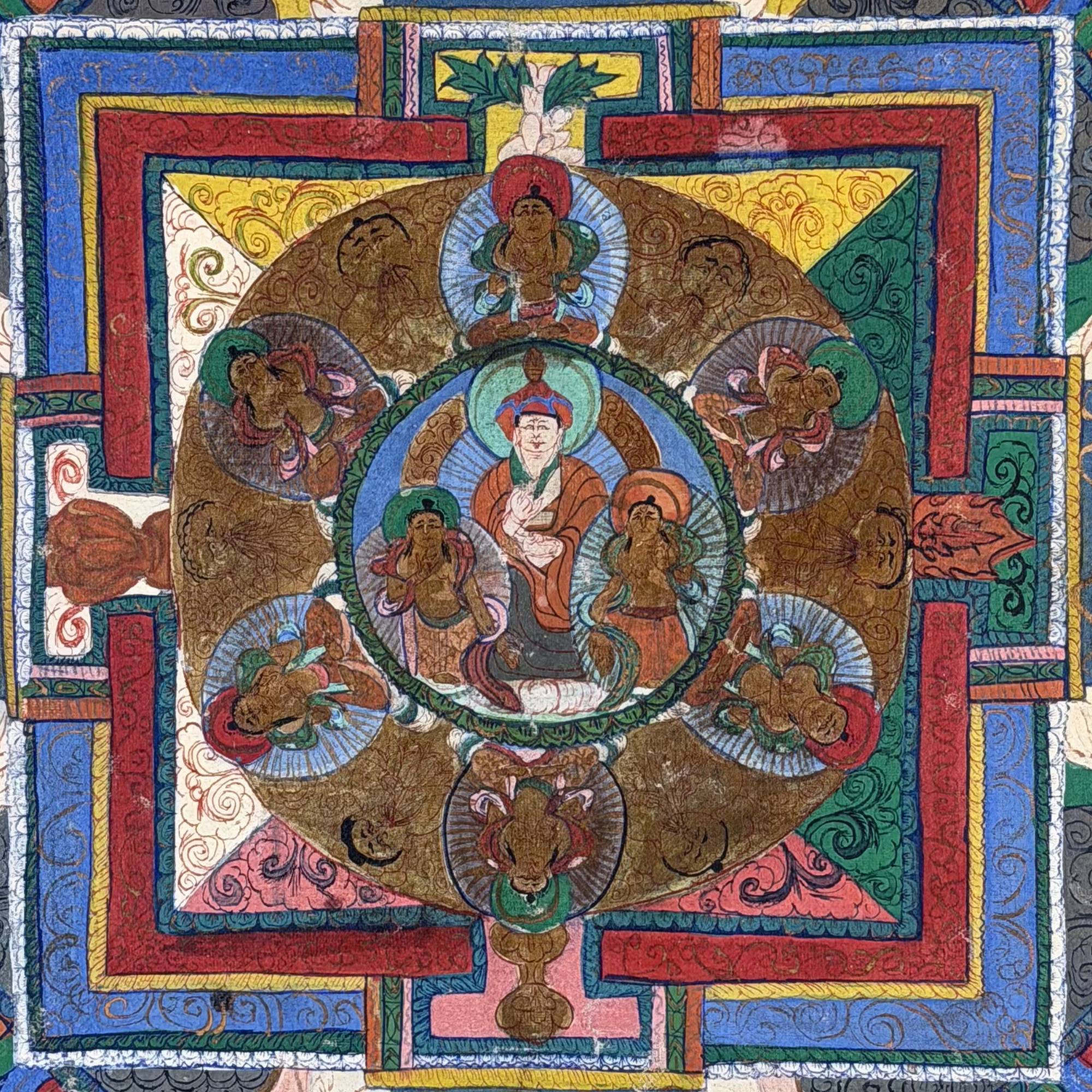
Would you like to bring the atmosphere and symbolism of Buddhist art into your home? In the 1stBuddha gallery, you'll find a collection of Buddha statues and other works of art.
One Teaching, Many Schools
During the lifetime of Siddhartha Gautama, the historical Buddha, there was no division. All his followers and disciples walked the path to enlightenment that he had shown them.
After his death, the sangha, the community of practitioners, gradually scattered, and different forms of Buddhism emerged. Each school developed its own practices, but the core remained the teachings of the Buddha. Despite their differences, they remain united by the same goal: enlightenment.
The best-known schools include:
- Theravada Buddhism
- Tibetan Buddhism
- Shingon Buddhism
- Nichiren Buddhism
- Pure Land Buddhism
Each school developed its own culture, which also shaped the way mandalas are created and used.
Mandala Meaning in Buddhism by Tradition
Theravada Buddhism: The Stupa as a Mandala
In Theravada Buddhism, mandalas are less well known. Still, the form does appear, for example in the construction of the stupa.
The mandala can also be found in ancient scriptures, such as the Atanatiya Sutta in the Digha Nikaya, part of the Pali Canon.
Tibetan Buddhism: Sand Mandalas, Thangkas, and Meditation
Tibetan Buddhism, also known as Vajrayana, is a branch of Mahayana Buddhism. Here, the mandala developed into both sand painting and thangka painting. The mandala is also part of the Anuttarayoga Tantra practices.
In this tradition, the mandala serves three important functions:
- A protected, sacred space. The mandala is seen as a sheltered place, separated and protected from the impure outer world. This is why the Buddha mandala is regarded as a Buddha field or a place of nirvana.
- An aid to meditation. During meditation, the practitioner focuses on the image of the mandala until every detail has been internalized. After that, they can call it to mind at will, clearly and vividly. In this way, tantric Buddhists use the mandala to support their meditation.
- The mandala offering. In this practice, the entire universe is offered symbolically. According to tradition, it was taught by Siddhartha Gautama Buddha himself and leads to ultimate happiness and enlightenment.
Shingon Buddhism: The Japanese Mandalas of Kukai
Shingon Buddhism is also a branch of Mahayana Buddhism and is practiced in Japan. Here, the mandala plays a major role mainly in rituals, although it differs from the mandalas of other schools.
According to tradition, Kukai, the founder of Shingon Buddhism, brought two mandalas back to Japan after his training in China:
- the Mandala of the Womb Realm
- the Mandala of the Diamond Realm
These two mandalas are central to Shingon rituals, especially the Abhiseka initiation ritual. During this ritual, a new student is blindfolded and asked to throw a flower onto the mandala. The spot where the flower lands determines which path the student will follow.
Nichiren Buddhism: A Mandala of Characters
Nichiren Buddhism is a branch of Mahayana Buddhism practiced in Japan. It was founded in the 13th century by the Japanese priest Nichiren.
Here, the mandala takes the form of a moji-mandala: a paper hanging scroll with Chinese characters and medieval Sanskrit script. These characters represent:
- elements of the Buddha's enlightenment
- protective Buddhist deities
- certain Buddhist concepts
The original moji-mandala is the Gohonzon, inscribed by Nichiren himself.
Pure Land Buddhism: The Mandala as a Teaching Aid
Pure Land Buddhism is a branch of Mahayana Buddhism and one of the most widely practiced traditions in East Asia. It focuses on the teachings of Amitabha Buddha. The three primary texts of this tradition are:
- the Longer Sukhavativyuha Sutra
- the Shorter Sukhavativyuha Sutra
- the Amitayurdhyana Sutra, also known as the Contemplation Sutra
The mandalas of this school depict the Pure Lands described in these sutras. They serve mainly as teaching aids rather than as objects of meditation, as they do in Vajrayana.
The best-known Japanese mandala from this tradition is the Taima Mandala. It is based on the Contemplation Sutra and was created in 763 CE.
Jodo Shinshu: The Nembutsu as a Mandala
Besides pictorial depictions of the Pure Lands, Jodo Shinshu, a branch of Pure Land Buddhism, knows another form. The Japanese monk Shinran, and later Rennyo, designed a mandala with the words of the nembutsu, Namu Amida Butsu, written on a hanging scroll.
This created an object of reverence for the lower classes of Japanese society. Jodo Shinshu Buddhists still place this mandala in their homes and in the butsudan, the household altar, today.
The Mandala by Tradition at a Glance
- Theravada: less well known, but found in the stupa and in ancient scriptures.
- Tibetan Buddhism: sand and thangka mandalas, used as a sacred space, for meditation, and in the mandala offering.
- Shingon: two central mandalas used in the initiation ritual.
- Nichiren: a moji-mandala with Chinese characters and Sanskrit script.
- Pure Land: a pictorial depiction of the Pure Lands, used mainly as a teaching aid.
Conclusion
The mandala is much more than a beautiful circular image. It is a symbolic representation of the universe that has taken on its own form and function in each Buddhist school. In Tibetan Buddhism it is an aid to meditation, in Shingon a ritual object, and in Pure Land Buddhism a teaching tool.
Once you understand the connection between Buddha and mandala, you see Buddhist art with new eyes. Behind every line, color, and character lies the same core: the teachings of the Buddha and the path to enlightenment.
Contact Us
Has the rich symbolism of Buddhism inspired you? Explore the collection of Buddha statues and artworks at 1stBuddha. Have questions about our collection? Contact us, and we'll be happy to help.


