
Anyone who explores Hinduism soon discovers a rich world full of stories about divine incarnations. At the heart of these stories are the avatars: forms in which the divine descends to earth, most often as Lord Vishnu. Each avatar has its own purpose, from restoring cosmic balance to passing on profound spiritual teachings.
In this article, you'll discover the avatar meaning, get to know both the best-known and lesser-known avatars, and learn about the stories behind them. You'll also find practical tips for bringing their lessons into your own life.
"The soul is neither born, nor does it die."
— Bhagavad Gita
Meaning of Avatar: What Are Avatars in Hindu Mythology?
In Hindu mythology, an avatar is the incarnation of a deity who descends from the spiritual realm into the earthly world. Most often, this is Vishnu, the god who preserves the universe. The Sanskrit word avatar means, quite literally, "descent."

The divine can appear in many different forms: as an animal, as a human, or as a combination of both.
Why Does the Divine Descend?
Avatars appear at times when the world is in danger of losing its balance. Their main purposes are:
· Preserving dharma: protecting righteousness and the moral order.
· Restoring cosmic order: pushing back chaos and evil.
· Sharing wisdom: passing on profound teachings to humanity.
The Ten Avatars of Lord Vishnu (Dashavatara)
The best-known list of Vishnu's incarnations contains ten avatars. Together, they are called the Dashavatara, which means "ten avatars."
1. Matsya – The Fish
In his first avatar, Vishnu appeared in the form of a fish. During a devastating flood, Matsya saved humanity and the sacred scriptures. This avatar symbolises protection and preservation.
2. Kurma – The Tortoise
The second avatar took the form of a giant tortoise. Kurma played a crucial role in the churning of the cosmic ocean, through which the gods sought to obtain the nectar of immortality. Kurma represents patience and support.
3. Varaha – The Boar
In the form of a wild boar, Varaha lifted the earth out of the cosmic ocean and saved it from destruction. This avatar symbolises strength and protection.
4. Narasimha – The Man-Lion
Narasimha is half man, half lion. In this formidable form, Vishnu protected his devotee Prahlada by defeating the demon king Hiranyakashipu. Narasimha represents divine courage.
5. Vamana – The Dwarf
The fifth avatar appeared as a dwarf Brahmin. Vamana cleverly outwitted the demon king Bali, who had seized control of the universe. He embodies humility and wisdom.
6. Parashurama – The Warrior with the Axe
Parashurama, armed with an axe, set out to destroy oppressive Kshatriya rulers. He represents the spirit of the divine warrior.
7. Rama – The Prince of Ayodhya
Rama is world-famous as the hero of the epic Ramayana. He embodies righteousness, duty and heroism. To this day, his story serves as a guide to ethical living.
8. Krishna – The Playful Divine Child
Krishna is known for his wisdom and his teachings in the Bhagavad Gita. He represents the divine aspect of joy, love and devotion.
9. Buddha – The Enlightened One
As the ninth avatar, Buddha brought the principles of compassion and non-violence to the forefront. His teachings continue to inspire millions of people on their spiritual path.
10. Kalki – The Future Warrior
Kalki has yet to appear. According to tradition, he will end the current age of darkness and restore righteousness, and he is often depicted riding a white horse. Kalki symbolises hope and transformation.
Lesser-Known Avatars of Vishnu
Beyond the Dashavatara, the tradition recognises other incarnations and divine figures:
· Hayagriva – the horse-headed avatar: he is associated with knowledge and wisdom, particularly the Vedas.
· Dhanvantari – the divine healer: he embodies the art of healing and is revered as the source of Ayurveda, the traditional Indian system of medicine.
· Mohini – the enchantress: this female avatar used her enchanting appearance during the churning of the cosmic ocean to help the gods obtain the nectar of immortality.
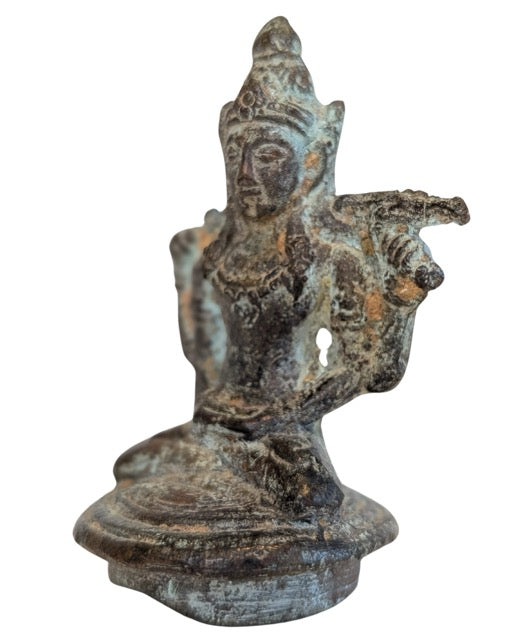
· Narada – the divine sage: he is known for his celestial music and wisdom, and for his role as a messenger between the gods.
The Stories and Myths Behind the Avatars
The stories surrounding the avatars are more than captivating tales. They contain valuable lessons that remain relevant today.
The story of Rama in the Ramayana, for example, teaches us about righteousness, duty and sacrifice. Krishna's role in the Mahabharata and the Bhagavad Gita shows what wisdom, ethics and the path to spiritual liberation truly mean.
"You have the right to perform your prescribed duties, but you are not entitled to the fruits of your actions."
— Bhagavad Gita
What Is the Avatar Meaning, Spiritually Speaking?
Avatars hold immense spiritual and cultural significance in Hinduism. They are far more than characters from ancient stories.
A Symbol of the Eternal Cycle
Avatars symbolise the eternal cycle of creation, preservation and destruction. Belief in their coming is a reminder that the divine intervenes again and again to maintain cosmic balance, or dharma.
A Source of Strength and Inspiration
For devotees, avatars are a source of strength, inspiration and guidance. Their stories also remind us of our own moral responsibilities in the world.
How to Bring Avatars into Your Own Life
Integrating avatars into your daily life can be a spiritually enriching experience. Here are a few ways to do so:
· Set up a home altar: create a sacred space in your home with avatar statues and offerings.
· Meditate and pray: use an image or statue of an avatar as a focal point for meditation and worship.
· Attend festivals and rituals: take part in celebrations and ceremonies dedicated to specific avatars.
Looking for the right statue for your altar? The 1stBuddha collection offers a variety of Hindu deity statues.
Frequently Asked Questions About Avatars
What Are the Ten Avatars of Vishnu?
The ten avatars, known together as the Dashavatara, are traditionally:
1. Matsya (the fish)
2. Kurma (the tortoise)
3. Varaha (the boar)
4. Narasimha (the man-lion)
5. Vamana (the dwarf)
6. Parashurama (the warrior with the axe)
7. Rama (the prince of Ayodhya)
8. Krishna (the divine statesman)
9. Buddha (the enlightened one)
10. Kalki (the future warrior on a white horse)
In some traditions, Balarama, Krishna's elder brother, appears in the list, usually in place of Buddha.
Which God Has 24 Avatars?
In the Bhagavata Purana and later traditions, Vishnu is credited with far more incarnations than the well-known ten, and a list of 24 avatars is often cited. One of them is Dattatreya, who is regarded as a combined form of the Hindu trinity of Brahma, Vishnu and Shiva. Dattatreya is also linked to the number 24 in his own right: according to tradition, he learned from 24 teachers.
What Are the First Four Avatars of Vishnu?
The first four avatars are Matsya, Kurma, Varaha and Narasimha. According to tradition, they appeared during the first age, the Satya Yuga.
Does Shiva Have Avatars Too?
Unlike Vishnu, Shiva has no widely accepted, fixed list of avatars. Devotees more often speak of forms or manifestations. Bhairava, a fierce form of Shiva, is sometimes named as his ninth form. Rudra is considered an essential aspect of Shiva that comes close to the idea of an avatar.
What Are the 64 Forms of Shiva?
The Shaiva tradition speaks of 64 forms or manifestations of Shiva. Each form expresses a different aspect of his divine power. The exact descriptions vary between traditions and texts.
Conclusion: The Timeless Avatar Meaning
Avatars in Hindu mythology are more than objects of worship. They embody divine teachings, ethical values and deep cultural significance. From the protective Matsya to the future Kalki, each avatar reveals something about how the divine keeps the world in balance.
By understanding the avatars, you gain insight into the heart of Hindu spirituality and the eternal cycle of creation and preservation. At 1stBuddha, we believe these ancient stories can offer direction and inspiration in modern life as well.
Want to Learn More About Avatars and Hindu Deities?
Do you have questions about the meaning of a specific avatar, or are you looking for a statue for your home altar? Contact us – the 1stBuddha team will be happy to help.


