
Few spiritual concepts capture the imagination quite like nirvana. It lies at the heart of the Buddha’s teachings and is regarded as the highest goal in Buddhism. Yet the word raises many questions. Is nirvana a place, a feeling, or something else entirely?
So what is nirvana exactly, and what is the definition of nirvana across different traditions? In this article, we set out the most important meanings clearly. We look at the literal meaning, the role of nirvana in the life of the Buddha, the four stages of enlightenment, and the meaning of the concept in Hinduism and Jainism.
What Is Nirvana? The Literal Meaning of the Word
Literally, nirvana means “blown out” or “extinguished,” like a candle flame that has been blown out. The image is a powerful one: what is extinguished is the fire of craving and suffering that keeps a person trapped.
Nirvana is often mentioned in the same breath as enlightenment. However, the word does not carry exactly the same meaning in every religion. The concept appears in Buddhism, Hinduism and Jainism, each giving it its own interpretation.
Nirvana or Nibbana?
In Sanskrit, the term is nirvana. In Pali, the language of the oldest Buddhist scriptures of the Theravada tradition, it is called nibbana. Both words refer to the same concept.
Buddhist Nirvana
Nirvana is first and foremost associated with Buddhism. Buddhist nirvana is the highest state a person can attain.
What Is the Definition of Nirvana?
In Buddhism, nirvana means that all of a person’s desires and suffering come to rest. It is often described as perfect peace and happiness. It is sometimes compared to heaven, but nirvana is not a place you go to. It is rather a state of complete liberation.
The key aspects of nirvana are:
-
Freedom from suffering: the end of the dissatisfaction and pain that arise from craving.
-
Freedom from rebirth: breaking the endless cycle of birth and death.
-
Extinction of the three poisons: greed, hatred and delusion disappear completely.
Other Names for the Highest Goal
Besides nirvana, the Buddha also used other terms to describe this highest goal. Each name highlights a different aspect:
-
Panita: the excellent or sublime
-
Suddhi: purity
-
Khema: security and safety

The Enlightenment of Gautama Buddha
According to Buddhist tradition, Gautama Buddha attained nirvana after six years of rigorous practice and meditation. The decisive moment came while he was meditating under the Bodhi tree. Since then, his enlightenment has served as the example for every practitioner.
Not Nihilism, but Liberation
Within the tradition, the Buddha was at times accused of being a nihilist, as if nirvana simply meant “nothing.” Buddhists have always firmly rejected this. The Buddha himself summarised his teaching in these words:
“One thing, and only one thing, do I teach: suffering and the cessation of suffering.”
The Samyutta Nikaya, one of the five collections (nikayas) of the Buddhist scriptures, offers a clear description:
“The extinction of greed, the extinction of hatred, the extinction of delusion: this is called nirvana.”
Nirvana, then, is not the annihilation of the self, but the end of everything that causes suffering.
The Four Stages of Nirvana in Theravada Buddhism
In Theravada Buddhism, nirvana is the ultimate goal. Practitioners work towards it step by step by putting the path into practice. The tradition distinguishes four stages, depending on how many “fetters” still bind a person to existence.
The Four Levels of Enlightenment
-
Stream-enterers: they have broken the first three fetters, namely a false view of the self, doubt, and clinging to rites and rituals.
-
Once-returners: they have broken the same three fetters and have also greatly weakened the fetters of lust and hatred.
-
Non-returners: they have broken the five fetters that bind a person to the world of the senses.
-
Arahants: they have fully attained nirvana.
The Symbol of Nirvana in Buddhism
Many people look for a fixed symbol of nirvana in Buddhism. There is no single official symbol, but several images are closely connected to the concept:
-
The extinguished flame: the most direct reference to the literal meaning of the word.
-
The Bodhi tree: the tree under which the Buddha attained enlightenment.
-
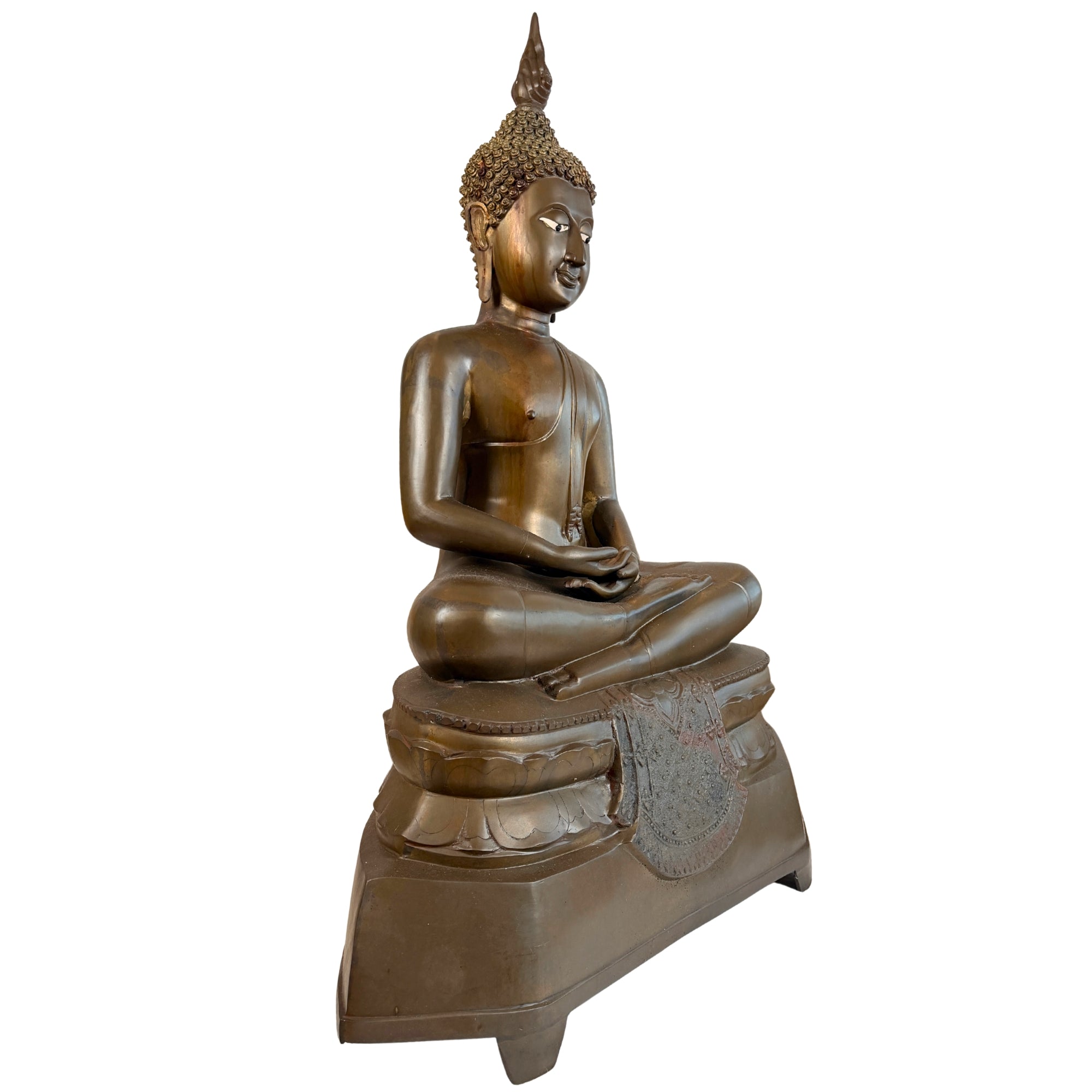
The Buddha in meditation posture or with the earth-touching hand: these images refer to the moment of his enlightenment.
-
The reclining Buddha: this posture represents parinirvana, the final nirvana at the time of the Buddha’s passing.
At 1stBuddha, we find that this symbolism helps many people bring the meaning of nirvana closer, both in their meditation practice and in their homes.
Nirvana in Other Religions
Although nirvana is mainly associated with Buddhism, a related concept also plays a role in other Indian religions.
Nirvana in Hinduism
In Hinduism, the highest goal centres on moksha: liberation from the cycle of rebirth. The word nirvana also appears in Hindu texts, including the Bhagavad Gita, which speaks of brahma-nirvana: merging with the divine.
Nirvana in Jainism
In Jain literature, moksha and nirvana are used to refer to the liberation or salvation of the soul. Attaining nirvana here means breaking the cycle of eight types of karma. These eight aspects relate to:
-
knowledge
-
perception
-
attachment
-
lifespan
-
name (body)
-
caste or status
-
feeling
-
obstacles
In short, nirvana in Jainism means breaking these karmic bonds so that the soul becomes completely free.
Conclusion
Nirvana literally means “extinguished,” but its deeper meaning goes much further. In Buddhism, it stands for the complete stilling of greed, hatred and delusion, and with it the end of suffering and rebirth. Through his own enlightenment under the Bodhi tree, the Buddha showed that this liberation is within reach. Theravada Buddhism describes the path towards it in four clear stages, while Hinduism and Jainism each offer their own view of liberation.
Anyone who explores nirvana discovers a teaching that is not about emptiness, but about freedom. At 1stBuddha, we believe in making this rich meaning accessible to everyone interested in the wisdom of Buddhism.
Contact Us
Do you have questions about nirvana, the teachings of the Buddha or the symbolism behind Buddha statues? Contact us anytime. We are happy to help and offer personal guidance.


